Post-Auction Protection for Your CNC Auction Win
Winning a used CNC machine at auction feels great. The bidding is over, the timer hits zero, and you get that rush of victory. But before you wire the money, the real work starts. What happens next can decide if you just scored a smart upgrade for your shop or a very heavy problem sitting on a truck.
When late spring hits and shops start gearing up for busy summer and fall production, it is easy to rush the payment step. Schedules are tight, orders are building, and every spindle hour matters. That is exactly when small misses can turn into big headaches: surprise repairs, control issues your team cannot support, or rigging bills that blow your budget.
We put together a simple, practical checklist to help you slow down just enough to protect that auction win. This is the same type of thinking we use every day at CNC Exchange when we work with used CNC machines for sale and manage inspections, appraisals, and logistics for buyers.
Review Service History and Actual Machine Hours
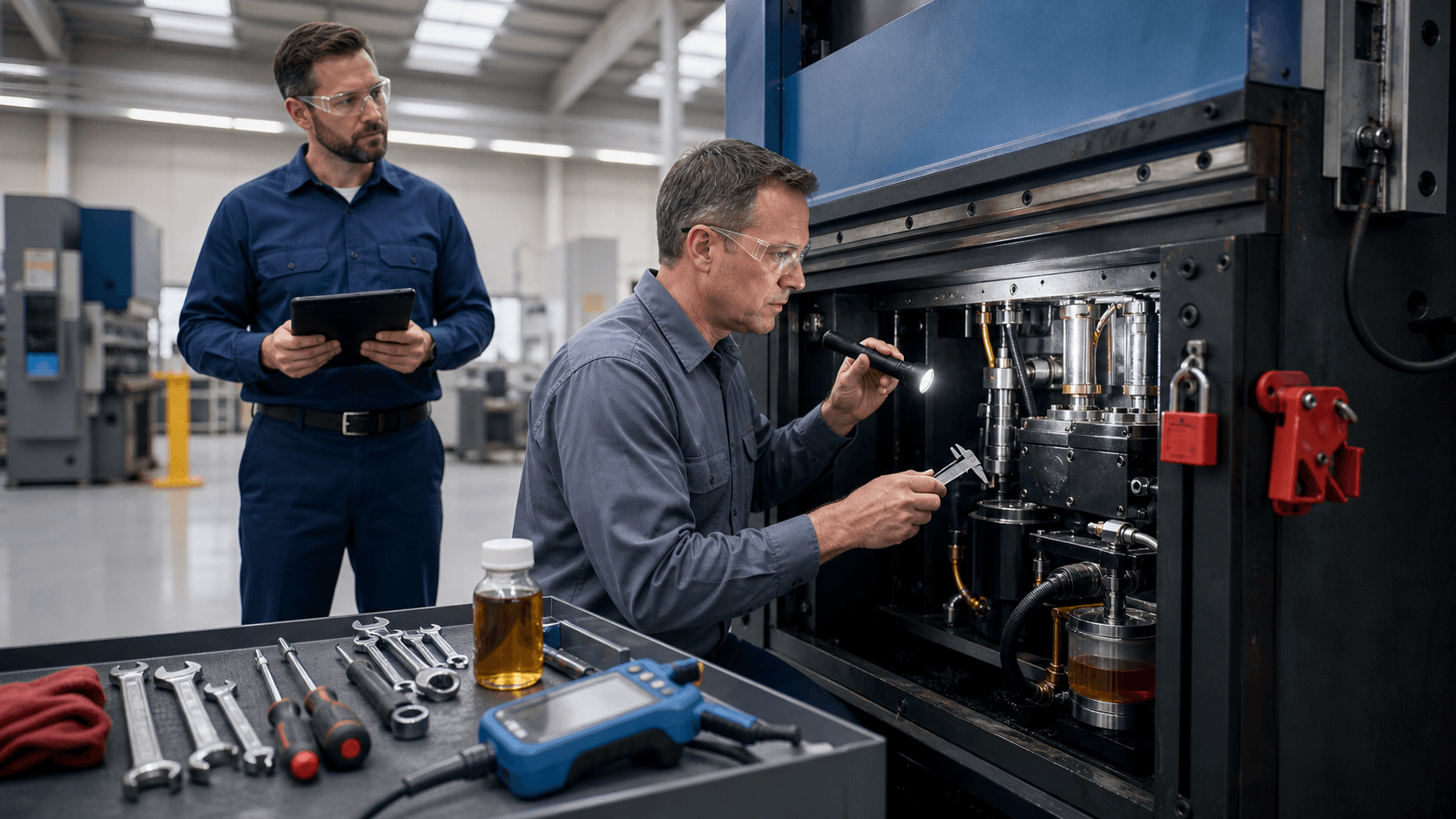
Before you pay, you want to know how the machine has been treated. Service history is like a health record. It tells you if the machine was loved, ignored, or run into the ground.
Ask for whatever records you can get, even if it is a rough mix of paper and digital files. Useful documents include things like:
- OEM service reports and field tech notes
- In-house maintenance logs and PM checklists
- Parts invoices for spindles, ball screws, drives, and boards
- Any warranty or extended coverage paperwork
Read through these with a simple mindset. Look for patterns such as repeated alarms, frequent spindle swaps, or long gaps with no maintenance at all. Recent big-ticket parts can be good news as long as you understand why they were replaced.
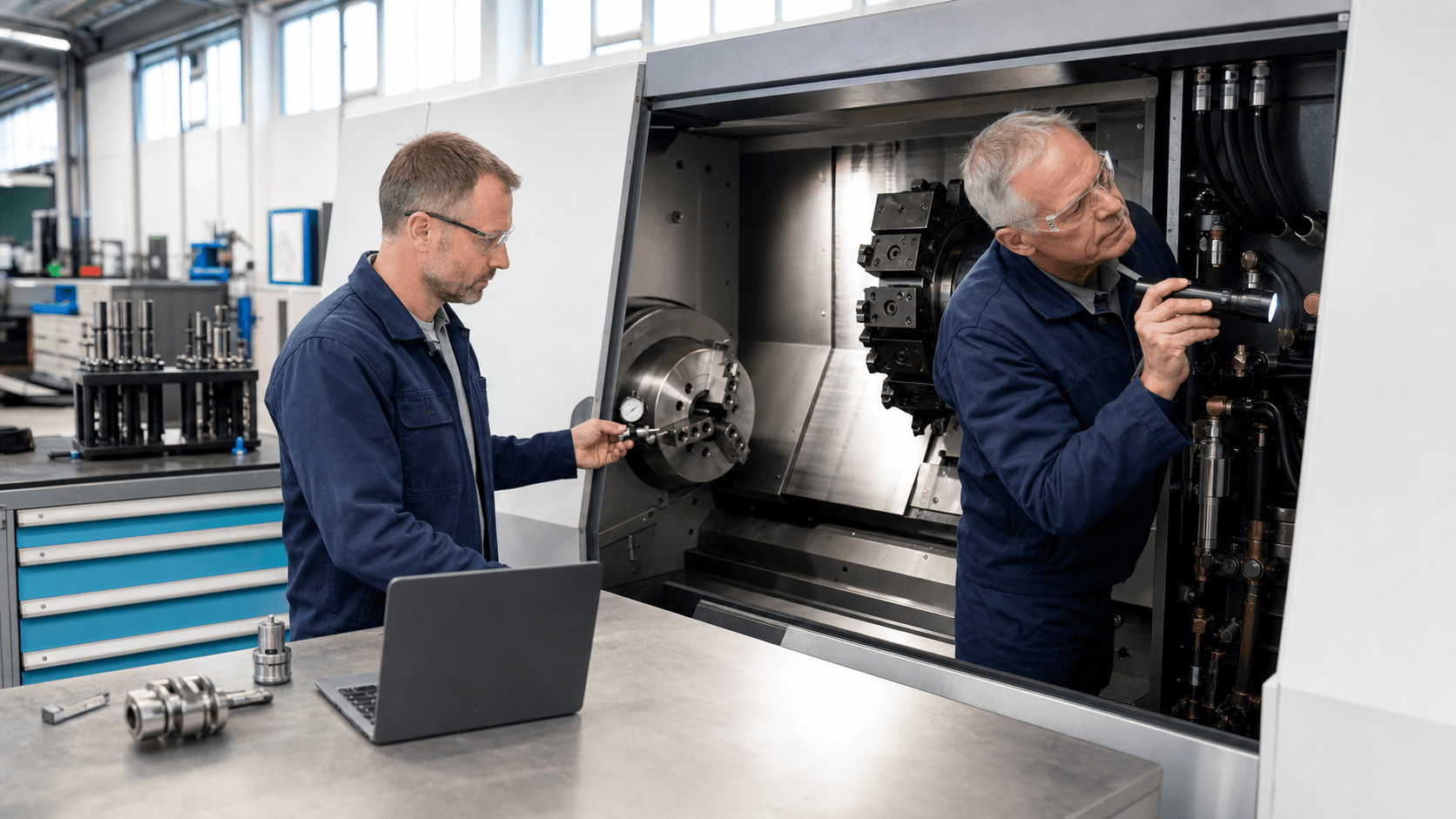
Then match the paperwork to what the control shows. Have someone on-site or a trusted inspector check:
- Power-on hours
- Spindle run hours
- Axis travel or servo hours
If the listed hours look far lower or higher than what the records suggest, ask why. A machine with low hours but a long list of failures may have deeper issues. A machine with higher hours but steady preventive maintenance may be a safer bet. You just want the story to make sense before you lock in payment.
Confirm Control Model, Software Version, and Compatibility
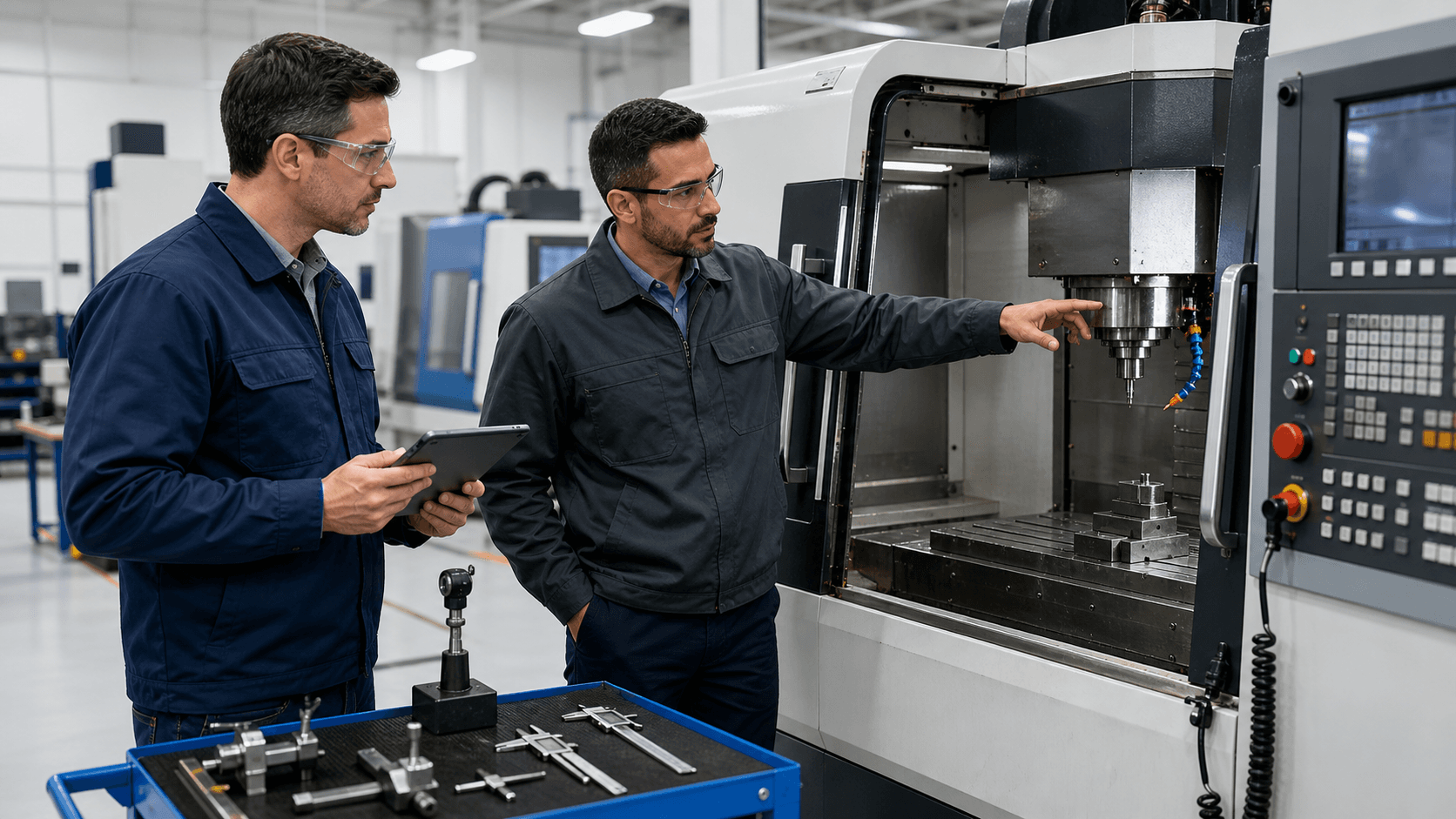
Controls can make or break how smoothly a used CNC fits into your shop. Even solid machine iron can cause trouble if the control is old, unsupported, or totally different from what your team runs today.
At a minimum, confirm these items directly from the control screen or nameplates:
- Exact control model and series
- Software or firmware version
- Installed options, like high-speed machining, probing, or networking
- Available ports or methods for file transfer
Then think about your shop standards. Do your programmers already have proven posts for this control family? Can you move programs using your normal method, whether that is USB, Ethernet, DNC, or memory card? If not, you may be adding time for new posts, training, and IT work.
It also helps to speak with the control maker or a trusted integrator. Ask open questions about parts availability, common failure points, and how long they expect to support that platform. If you plan to drop this machine into an existing cell or connect it to automation, check for any needed upgrades or interface cards before you commit your funds.
Estimate Rigging, Loading, and Transportation Costs
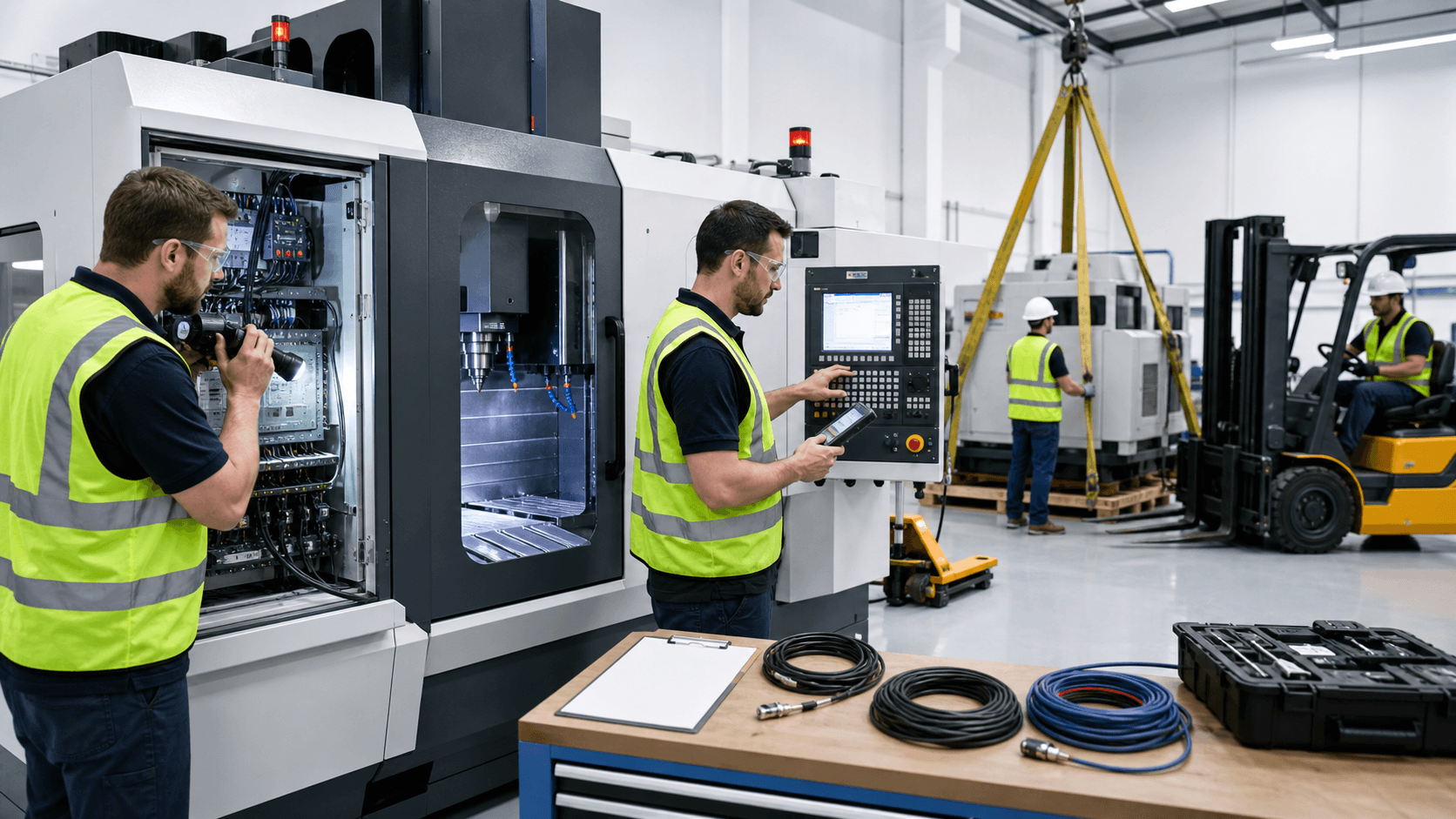
The hammer price is only part of the bill. Moving used CNC machines for sale from an auction floor to your plant comes with its own set of costs and risks. If you skip this step, your "deal" can vanish once the rigging quotes hit your inbox.
To get accurate numbers, share detailed information with riggers and carriers:
- Machine weight and overall dimensions
- Center of gravity notes from the manual, if available
- Ceiling heights, door widths, and aisle space at pickup and delivery
- Dock access, ground-level loading, or need for forklifts and cranes
Do not forget the small but important tasks, like who will disconnect power, drain coolant and oil, and remove anchors or leveling pads. If no one is clearly responsible, you can lose days on-site while everyone points fingers.
Depending on your region, late-spring weather and road work can slow heavy moves. Extra permits, escorts, or special trailers for tall or long machines can also add time. Getting firm quotes early lets you compare your total landed cost across other used CNC machines for sale, not just the auction price.
Assess Power, Air, and Floor Requirements at Your Facility
Before that machine shows up at your door, make sure your building is ready. Matching the machine to your plant utilities is a lot easier when you still have a week or two to plan.
Start with the basics:
- Voltage, phase, and required amperage
- Need for a separate transformer or line conditioner
- Air pressure and CFM for tool change, spindle chiller, or way covers
- Coolant, mist collection, and chip conveyor needs
Then look at the floor and layout. Check the weight per square foot and any foundation notes in the manual. Some machines are fine on standard concrete, others like a thicker pad. Make sure you have room for doors to open fully, for overhead crane access if you have one, and for chip bins and maintenance work.
Late-spring buys can sneak up on your facilities team. If you know a machine is likely coming, line up electrical and air drops, chip system changes, and layout tweaks before your production schedule hits peak load in the heat of summer.
Align the Purchase with Your Production Strategy
With all the excitement around an auction win, it is easy to forget the simple question: does this machine still fit what we really need to run? Take a short pause and check the fit against your current and near-term work.
Look at core points like:
- Parts you plan to run, by size, weight, and material
- Required tolerances, surface finish, and repeatability
- Tooling interfaces, tool capacity, and spindle speed range
- Automation potential, such as pallets, robots, or bar feeders
Then bring in the people who will live with the machine every day. Programming can flag post work and cycle time impacts. Quality can comment on probing, inspection access, and gage setups. Maintenance can review components that match or differ from your existing fleet.
It also helps to compare the total landed cost of this auction machine, including upgrades and rigging, with other used CNC machines for sale on the market. If another unit offers a better control, shorter setup times, or lower integration risk for a similar total cost, it may be smarter to walk away and wait for the next opportunity.
Finalize Your Deal with a Verification Plan
Before you send funds, pull everything into a simple, written checklist that your team can sign off on. Keep it short, clear, and focused on the big risk areas.
At a minimum, confirm that you have:
- Service history and realistic machine hours that tell a clear story
- Verified control model, software level, and shop compatibility
- Signed rigging and freight quotes with clear responsibilities
- Power, air, and floor requirements checked against your facility
- Production, programming, quality, and maintenance buy-in
When you treat post-auction work as part of the buying process, not an afterthought, you give your shop a much better chance of turning that auction win into dependable spindle time. That is the same mindset we use at CNC Exchange when we help buyers evaluate and move used CNC machines for sale, so they arrive ready to earn their keep instead of sitting idle on the floor.
Get Started With Your Project Today
If you are ready to upgrade your shop's capabilities, we invite you to explore our current inventory of used CNC machines for sale to find the right fit for your production goals and budget. At CNC Exchange, we carefully evaluate every machine so you can buy with confidence and keep downtime to a minimum. If you would like guidance on comparing models or planning an upgrade path, simply contact us and we will help you move your project forward.