Turn Auction Wins Into Production-Ready Machines
Winning a CNC machine auction feels great. You beat the crowd, landed a solid price, and now you are already thinking about new jobs you can quote. But the real work starts after the hammer falls. That is when small hidden problems can turn a bargain into a headache.
Post-auction validation is how we lower that risk. We slow things down, check the machine's history, inspect it on-site, run smart test cuts, and plan rigging and power ahead of time. When we do that, we turn an auction win into a reliable, production-ready machine that fits right into our shop, especially during midyear upgrades when schedules are tight and summer downtime is short.
Read the Machine's History Through Service Logs
Before anyone touches a wrench, we want to see service logs. Maintenance records are our first filter. They tell us how the machine was treated and how it might behave once it is in our plant.
Key items to request include:
- Preventive maintenance schedules and who did the work
- Spindle rebuilds or replacements
- Control board swaps, drives, or servo changes
- Crash reports or alarm histories
- Any retrofit or control upgrade details
What we are really looking for is a steady pattern of care. Regular oil changes, way lube checks, filter swaps, and coolant maintenance are all good signs. Documented spindle jobs and servo work are also positives, especially when the work was done by known service groups or the OEM, because it suggests the machine was repaired correctly and tracked responsibly.
Red flags are just as important:
- Long gaps where no maintenance is recorded
- The same axis alarm popping up again and again
- Hour counts that do not line up with the age or story of the machine
- Home-made wiring or "shop fixes" with no notes on what was changed
Those gaps do not always mean we should walk away. However, they do mean we should be cautious and budget for extra service before we call the machine production ready.
Inspect on Site Before You Move a Single Bolt
If the auction terms allow, we treat an on-site inspection as non‑negotiable. Even a short visit can reveal things that no log ever will.
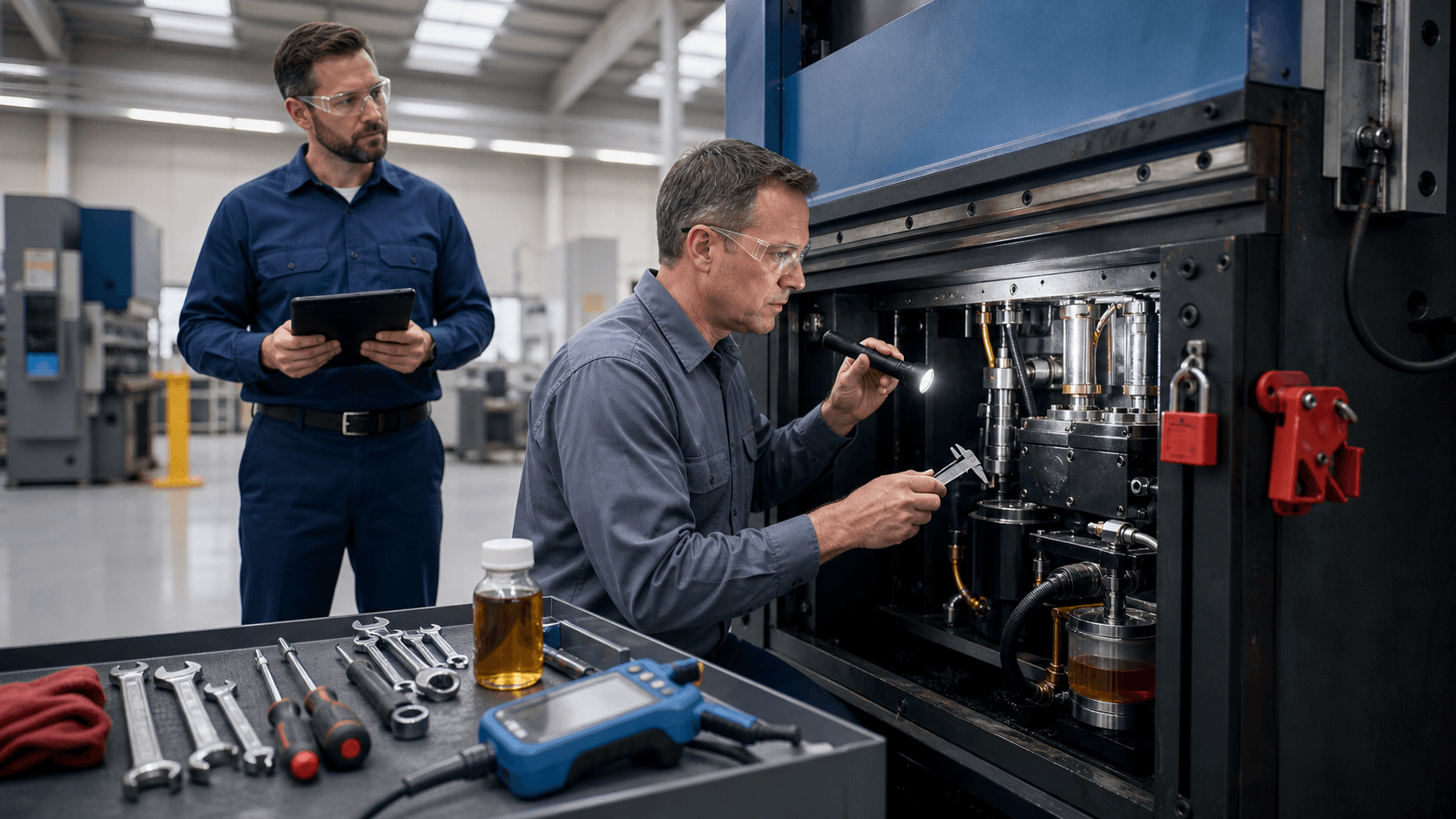
On the mechanical and general condition side, we walk the machine and check overall cleanliness, signs of leaks or abuse, and common wear points like way covers, wipers, exposed rails, ball screws, and couplers. We also look closely at the spindle nose and taper for fretting, dings, or pull stud damage, and we pay attention to turret or tool changer alignment and any sticky motion. Finally, we review the support areas that tend to hide issues, coolant tanks, chip conveyors, filters, and the electrical cabinet wiring, fans, and dust buildup.
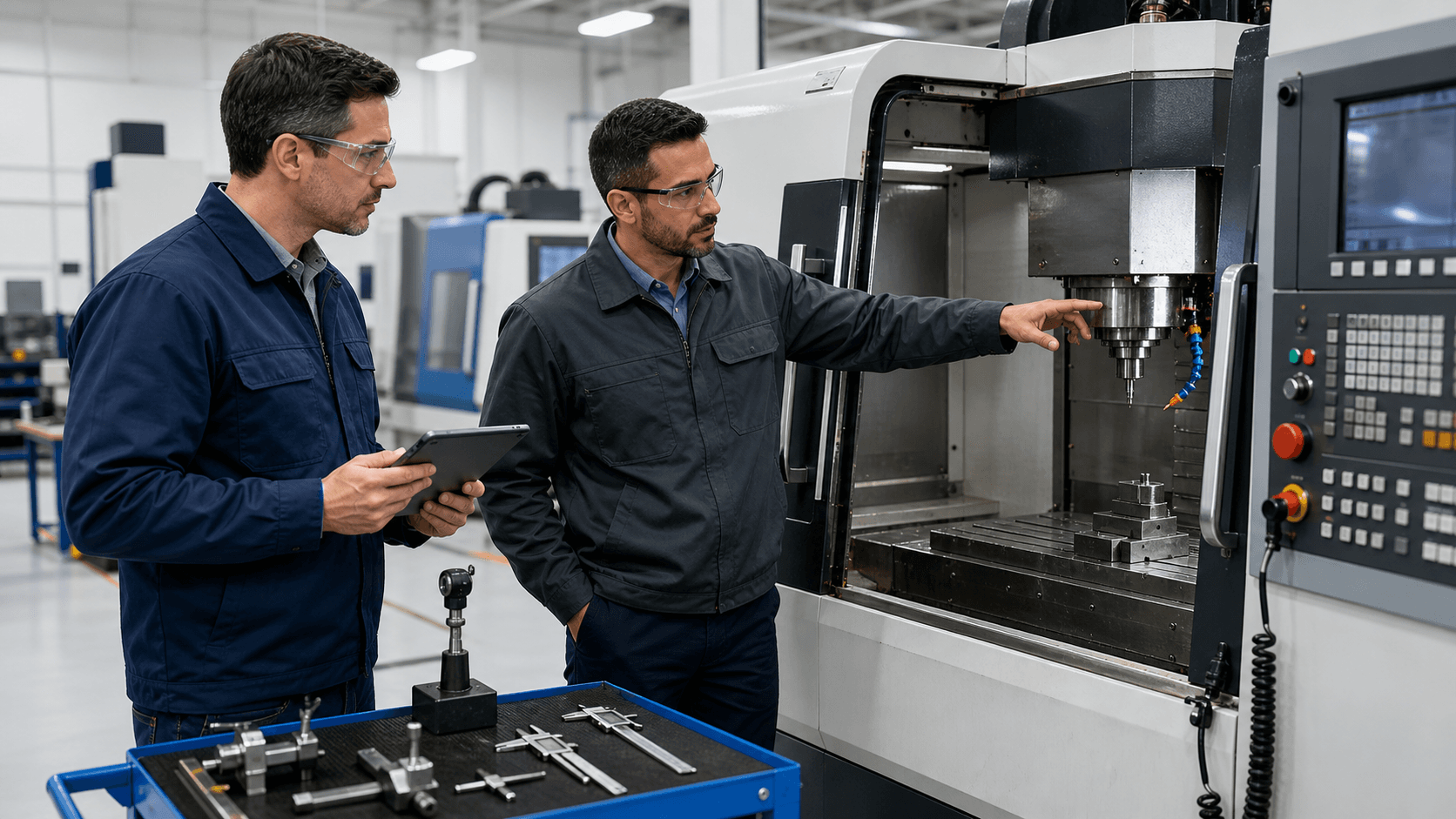
On the control side, we confirm:
- Control model and software version
- Licensed options like 4th axis, probing, high-speed machining, look-ahead, and networking
- Backup media, parameter lists, and ladder or macro backups
Timing and storage conditions matter, too. When a CNC machine auction closes in late spring, we are often looking at equipment that sat through winter. That is why we specifically check for rust on exposed surfaces that points to condensation, water marks inside cabinets or under coolant tanks, and stiff ways or screws from sitting idle for months. Cold storage, humidity, or long power-off periods do not always ruin a machine, but they can add real work during startup, and we want to know that before we schedule it into production.
Put the CNC to Work with Smart Test Cuts
A test cut is the closest thing we have to a real test drive. If the seller or auction terms allow, we insist on running the machine before we sign off on it.
We start with basic health checks:
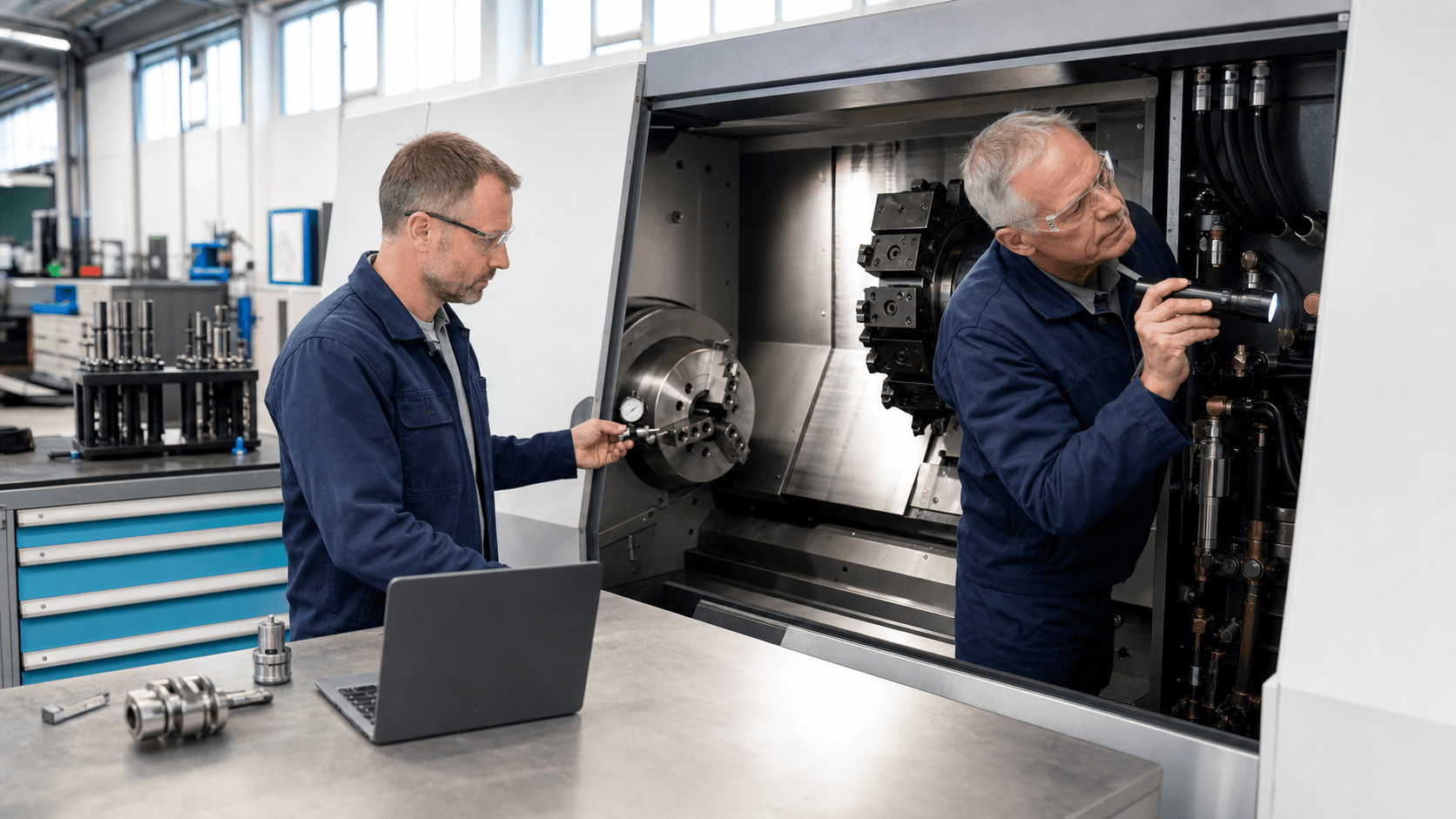
- Spindle warm-up from low RPM to top speed, listening for growl or vibration
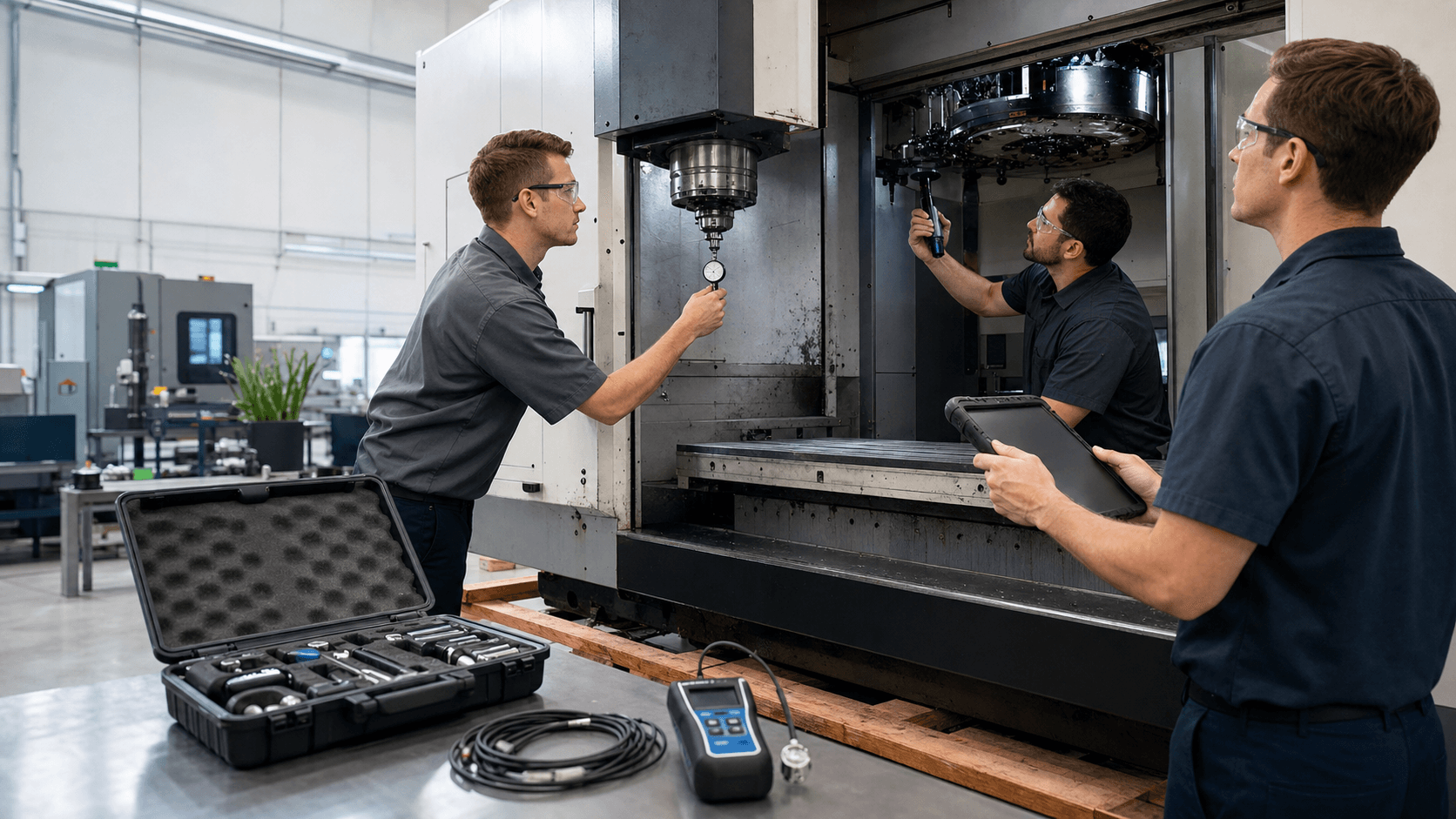
- Spindle runout measured at the taper or a test bar
- Axis rapids, checking for noise, following error, and smooth motion
- A quick circular interpolation test to see if the machine cuts true circles
After that baseline, we move into cuts that resemble real work, because part-like behavior is often where issues show up. We like to bring:
- Our own clean stock in the material we run most
- A short test program with pockets, bores, and linear moves
- A circle-diamond-square or similar geometry to check squareness and accuracy
We study surface finish, edge quality, and how repeatable the machine is when we run the same cycle back-to-back. If the machine has probing, we test basic probe cycles so we know the probe is alive and talking to the control.
When possible, we also:
- Check tool change consistency and time
- Verify coolant delivery at the tool, both flood and through-spindle if installed
- Watch spindle load meters during heavier cuts
Taken together, these checks tell us what we will likely face once the machine is on our floor with real production parts.
Confirm Rigging, Power, and Site Readiness
After a CNC machine auction, many buyers rush to get the machine shipped and forget to check if their building is actually ready for it. That is where costs and delays sneak in.
For rigging, we confirm:
- Machine weight, height, and footprint
- Center of gravity and lifting points
- Door sizes, low ceilings, pits, and sloped floors
- What lifting equipment the rigger needs, such as forklifts, gantries, or cranes
On the electrical side, we check with a qualified electrician:
- Required voltage and phase compared with our plant power
- Available amperage on the panel we plan to use
- Need for transformers, step-up or step-down
- Grounding and any clean power needs for sensitive controls
We also plan for support systems:
- Clean, dry air at the right pressure and flow
- Coolant supply, chillers, or mist collectors
- Chip handling, hoppers, and conveyors
- Floor condition, thickness, and any need for pads or anchors
Late spring and early summer are common times for construction and shutdown work in shops, and the best rigging crews and electricians book up fast. That is why we like to line up schedules before the truck ever leaves the seller's dock.
Protect Your Investment with Return and Escrow Tactics
Most CNC machine auction deals are sold "as-is, where-is." That does not always mean we have zero options, but it does mean we need to be smart about terms.
We pay close attention to:
- Any listed inspection window, either before or after the auction
- Whether a power-up test is allowed at the seller's site
- Any written notes on known defects or missing parts
If there is room to negotiate, we try to make the terms match the real risks of startup. That can mean conditional acceptance tied to a successful power-up or test cut, short and clearly defined return rights if the machine cannot be made operational, or escrow and milestone payments where funds are released after certain steps are passed.
To lower risk even more, we like to use:
- Third-party appraisals or condition reports
- Detailed inspection checklists signed by both sides
- Photo and video records of the machine powered up, cutting, and being loaded
At CNC Exchange, we focus on helping buyers and sellers set clear expectations so no one is surprised once the riggers roll in.
Lock in Your Win with a Post-Auction Validation Plan
Winning a CNC machine auction is the start, not the finish line. The real win comes when that machine is on our floor, powered up, cutting good parts, and hitting the delivery dates our customers expect.
A simple validation plan keeps us on track:
- Verify service logs and repair history
- Inspect on site before moving the machine
- Run smart test cuts that mirror real work
- Confirm rigging, power, and shop readiness
- Use return language and escrow where we can
When we time our purchases around mid-year budgets and summer downtime, we have room to do these steps without rushing. At CNC Exchange, we build this kind of planning into our marketplace and brokerage work so each auction win has a clear path from bid to truck to stable, profitable production.
Maximize Your ROI With a Smart CNC Equipment Sale
If you are ready to turn surplus machines into working capital, our CNC machine auction platform gives you direct access to serious buyers who understand the value of your equipment. At CNC Exchange, we manage the details so you can focus on running your business while your assets are actively marketed. Reach out through our contact page today to discuss your timeline, goals, and the best strategy for your next sale.